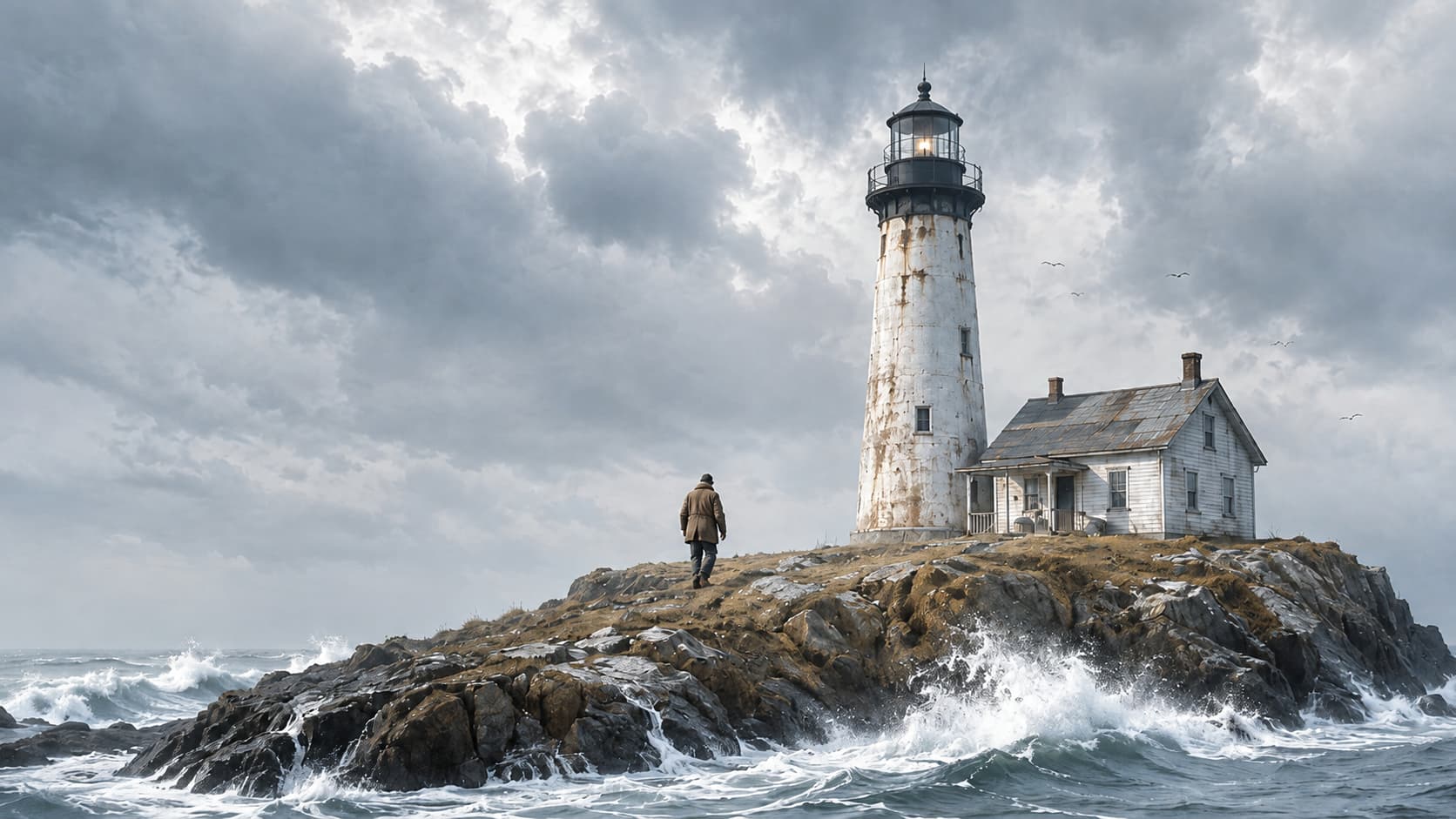
Imagine waking up on a small island with no traffic, no neighbors, and nothing outside your window except ocean.
For generations, that was everyday life for lighthouse keepers.
They climbed towers, maintained lamps and lenses, watched the weather, repaired equipment, kept detailed records, and remained ready to respond when ships were in trouble.
Some lived with their families at remote stations. Others spent long periods surrounded by little more than wind, waves, and darkness.
But there is one major difference between the romantic image of a lighthouse keeper and the job in America today:
Most U.S. lighthouses no longer need a traditional full-time keeper.
Automation changed the profession dramatically.
So do lighthouse keepers still exist? What did they actually do, what can similar jobs pay today, and is it still possible to live and work at a lighthouse?
What Did a Lighthouse Keeper Actually Do?
Historically, the keeper’s most important responsibility was making sure the light worked.
Before modern automated systems, that required constant attention.
Keepers maintained lamps, fuel, lenses, mechanical equipment, and the tower itself. They also performed repairs, kept records, monitored conditions around the station, and remained prepared for emergencies. The National Park Service notes that a keeper’s workday could begin before dawn and continue well past dusk.
At stations such as Cape Hatteras, keepers also stood rotating nighttime watches. The historic staff there included a principal keeper and two assistants who took four-hour shifts through the night.
A typical historical workload could include:
- checking the light;
- cleaning lenses and windows;
- carrying fuel;
- making mechanical repairs;
- painting buildings;
- maintaining grounds;
- recording weather;
- watching shipping traffic;
- responding to emergencies;
- maintaining keeper housing.
This was not simply a person sitting in a tower looking at the ocean.
A lighthouse was an operating navigation facility, and the keeper was responsible for keeping it working.
Did Lighthouse Keepers Really Live at the Station?
Yes.
Many lighthouse stations included living quarters for keepers and their families.
At remote stations, the job and home were effectively the same place.
That could mean living:
- on an island;
- along an isolated coastline;
- beside dangerous rocks or shoals;
- many miles from a town.
At Cape Hatteras, the principal keeper and assistants lived in dedicated keeper residences near the lighthouse.
The isolation could be difficult.
A National Park Service history of Sandy Hook includes letters from a keeper’s family describing homesickness and the repetitive surroundings of sand and water.
For some people, the solitude may sound peaceful.
For others, weeks of ocean, wind, darkness, and limited contact with outsiders could become the hardest part of the job.
Why Did America Stop Using Most Lighthouse Keepers?
Technology gradually replaced much of the work.
Electric lighting, automatic lamp controls, remote monitoring, and modern navigation systems reduced the need for someone to live permanently beside a beacon.
The Coast Guard began automating light stations over many decades. Boston Light eventually became famous as the last operational U.S. lighthouse station kept staffed with paid keepers even after its light itself was automated in 1998.
Other stations had been automated much earlier.
Pemaquid Point, for example, was automated in 1934.
Sandy Hook’s permanent keeper role also became increasingly unnecessary after reliable electric power arrived; today the Coast Guard maintains the active light there.
So the classic job portrayed in movies — one person living alone and manually keeping the beacon burning every night — is now largely historical in the United States.
Do Lighthouse Keepers Still Exist Today?
Yes, but usually not in the old sense.
Modern roles associated with lighthouses may include:
- park rangers;
- historic-site caretakers;
- maintenance workers;
- museum staff;
- interpreters;
- volunteers;
- Coast Guard personnel maintaining navigation equipment.
The National Park Service still has volunteer positions that use the title Lighthouse Keeper.
At Apostle Islands National Lakeshore, volunteer lightkeepers may live on the islands and provide tours, clean lighthouse buildings, maintain grounds, answer visitor questions, and help protect historic structures.
The park has also advertised opportunities for volunteers to spend three weeks or even a full summer serving as lightkeepers.
At Raspberry Lighthouse, volunteers and park rangers live and work together while providing tours and caring for the site.
So yes, you can still find people living at American lighthouses.
But the work is now often about historic preservation, tourism, maintenance, and visitor services rather than manually operating the navigation light.
Can You Actually Live at a Lighthouse Today?
In some programs, yes.
This is one of the most interesting surviving parts of lighthouse life.
The National Park Service has current caretaker and volunteer programs where housing is provided because the location is remote.
At Cape Lookout National Seashore, certain volunteer caretaker positions involve about 40 hours of service per week and include housing on barrier islands. Some positions require two volunteers specifically because of the remote setting.
At Apostle Islands, lighthouse volunteers may also stay on-site for extended assignments.
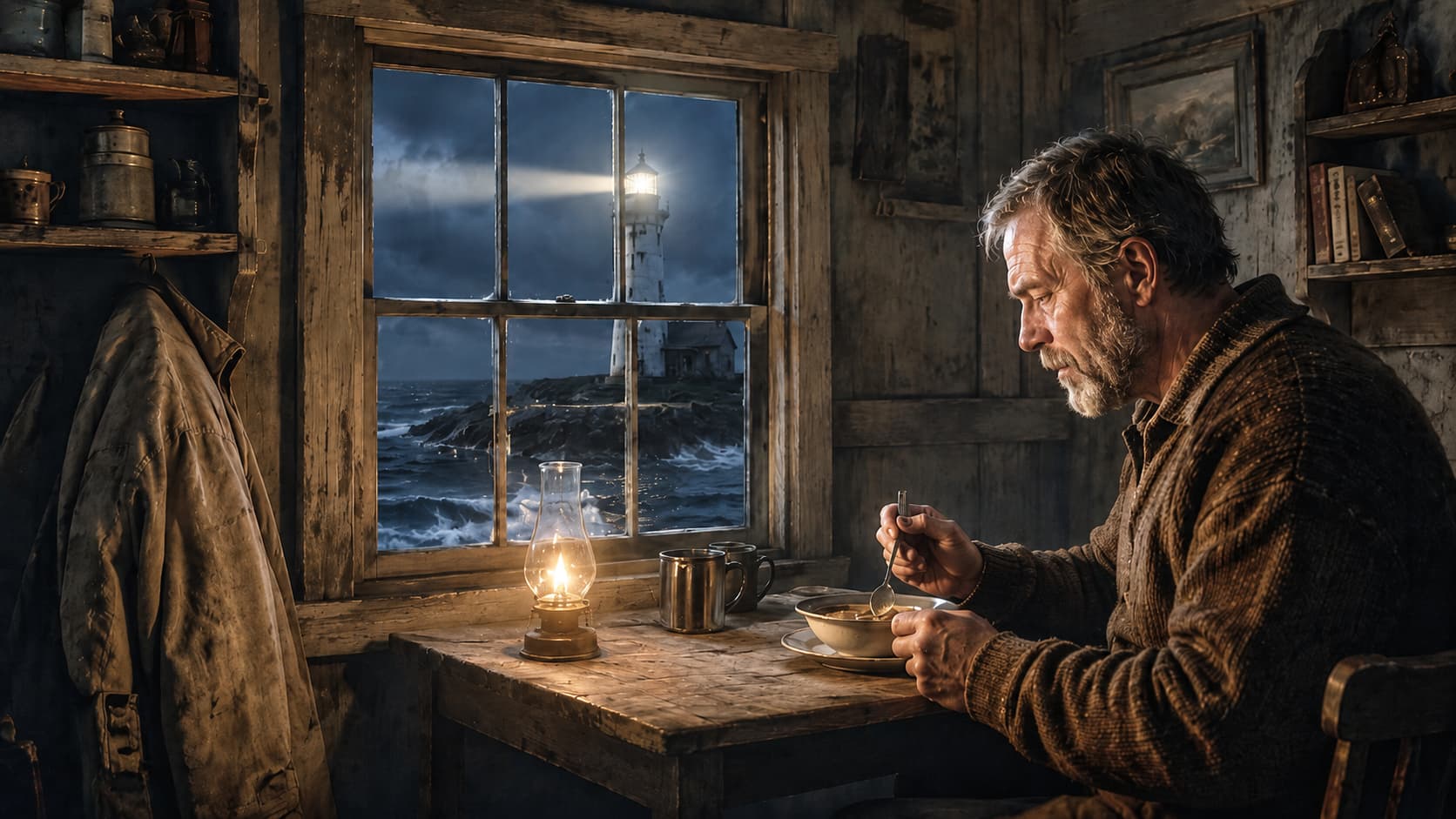
This means the lifestyle shown in an AI video — waking up beside the sea, climbing a lighthouse tower, and spending days far from normal city life — still exists in certain forms.
The difference is that the person may be a volunteer caretaker or park worker rather than a traditional lighthouse keeper.
What Would a Modern Lighthouse Caretaker Do?
The duties can be surprisingly ordinary.
A modern caretaker may spend more time cleaning toilets and cutting grass than staring dramatically into a storm.
At Apostle Islands, volunteer lighthouse keeper duties can include:
- providing lighthouse tours;
- cleaning the tower;
- cleaning other buildings;
- maintaining restrooms;
- replenishing supplies;
- keeping visitor records;
- answering questions;
- mowing;
- removing fallen debris;
- performing light trail work;
- watching for hazards;
- providing an on-site presence to discourage vandalism.
That paints a very different picture from the fictional solitary keeper protecting ships during violent storms.
The scenery can be extraordinary.
The daily work can still involve maintenance, cleaning, paperwork, and talking to tourists.
How Much Does a Lighthouse Keeper Make?
This question needs an important qualification:
There is no reliable modern U.S. national salary specifically for traditional lighthouse keepers because the occupation barely exists as a standalone paid job today.
The Bureau of Labor Statistics still includes tending lighthouses within the broader occupation Bridge and Lock Tenders. That category covers workers who operate bridges, canal locks, and lighthouses.
According to current O*NET data based on 2025 BLS wages, Bridge and Lock Tenders had a median wage of:
$27.74 per hour
or approximately:
$57,700 per year.
However, this should not be presented as “the average salary of an American lighthouse keeper.”
The category is dominated by bridge and lock workers, and only a tiny share — if any — may be doing something resembling traditional lighthouse tending.
For comparison, older BLS data from 2023 showed a median of $49,120 for the same broader occupation.
The newer 2025 data puts the median at $57,700.
So What Would Someone Working at a Lighthouse Earn Today?
It depends on the role.
A person working at a lighthouse today might actually be employed as:
- a park ranger;
- maintenance worker;
- visitor-services employee;
- historic-site manager;
- museum employee;
- government transportation worker;
- caretaker.
Their salary would normally be based on that occupation rather than on the title “lighthouse keeper.”
Some lighthouse residency programs are volunteer positions and therefore do not provide a conventional salary at all.
For example, NPS lighthouse programs in Apostle Islands explicitly describe the positions as volunteer service.
Housing may be part of the arrangement in certain remote volunteer positions, but that is very different from being paid a normal annual wage.
Did Lighthouse Keepers Make Good Money Historically?
Not necessarily.
The job came with unusual living conditions, but historical pay was often modest.
At Cape Hatteras, the National Park Service records that the Lighthouse Board historically provided housing, basic supplies, medicine, and salaries of up to about $800 per year during the nineteenth-century period discussed on the site.
That number should not be compared directly with modern wages without adjusting for historical purchasing power.
More importantly, lighthouse employment often included something many other workers did not receive:
housing at the station.
For remote keepers, living quarters were part of the job because there might be nowhere else nearby to live.
What Was the Hardest Part of Lighthouse Life?
The answer probably depended on the station.
But several difficulties appeared repeatedly.
Isolation
A remote keeper might go long stretches without seeing many people beyond family members or fellow keepers.
Weather
Lighthouses were often placed exactly where conditions were difficult:
- exposed coastline;
- islands;
- rocky points;
- dangerous shoals.
Strong wind, heavy rain, snow, ice, and storms were part of the environment.
Night Work
The light had to operate when mariners needed it.
That meant nighttime watches and irregular sleep.
Maintenance
Salt water and ocean air are hard on buildings and equipment.
Metal corrodes.
Paint deteriorates.
Glass becomes dirty.
Structures need constant attention.
Emergencies
Historically, keepers could be called upon when vessels were in distress. The National Park Service notes that they had to remain ready for emergencies such as shipwrecks.
Was the Job Dangerous?
It could be.
Lighthouses were often built in hazardous locations because those were the places ships needed warning.
The Coast Guard’s historical chronology records that the original Minot’s Ledge Lighthouse was destroyed during a severe gale in 1851, killing two keepers.
Other dangers could include:
- storms;
- rough seas;
- isolation during medical emergencies;
- fire;
- falls;
- difficult boat transfers;
- extreme cold.
Modern lighthouse caretakers generally face a different risk profile, but remote locations can still make weather and emergency response more complicated than at an ordinary workplace.
Could a Lighthouse Keeper Really Be Stranded for Weeks?
Historically, yes, especially at isolated island or offshore stations.
Modern volunteer programs can still involve multi-week residencies.
Apostle Islands has advertised lighthouse service assignments lasting three weeks or an entire summer.
Remote access also means weather can influence transportation.
That does not necessarily mean someone is trapped without contact for weeks, as dramatic movies sometimes suggest.
But living on an island lighthouse still requires more planning than commuting to a normal workplace.
Do They Still Need to Turn the Light On Every Night?
Usually not manually.
Modern navigation lights commonly rely on automated systems.
Cape Hatteras, for instance, now uses electricity and a photocell to control the light automatically.
That single technological change explains much of the disappearance of the old keeper profession.
Historically, someone had to make sure lamps were fueled, lenses were maintained, and mechanisms continued operating.
Today, electronics can perform many of those functions without requiring a family to live beside the tower.
Why Keep Lighthouses at All if Ships Have GPS?
Modern vessels have far better electronic navigation systems than sailors did a century ago.
But many active lights remain part of the U.S. aids-to-navigation system, while lighthouse buildings themselves have also become important historic sites.
At Sandy Hook, for example, the lighthouse remains active and the Coast Guard continues to maintain its light.
Other lighthouse properties are managed by the National Park Service, nonprofit organizations, local governments, or preservation groups.
Their modern value may therefore combine:
- navigation;
- history;
- preservation;
- tourism;
- education.
Is “Lighthouse Keeper” Still a Real Career Choice?
Not in the way it once was.
Someone searching job boards for a permanent position where they live alone on an island and manually operate a lighthouse every night will find very few opportunities.
Automation eliminated most of those jobs decades ago.
But someone interested in the lifestyle can still look for related opportunities in:
- National Park Service programs;
- historic preservation;
- lighthouse museums;
- park maintenance;
- visitor services;
- volunteer caretaker programs.
These roles can offer something very close to the physical experience of lighthouse life — including actually staying at remote stations — even though the job itself has changed.
Could You Handle the Isolation?
That may be the more interesting question than salary.
Imagine finishing dinner and looking outside.
No neighbors.
No traffic.
No stores.
No city lights.
Just black water and the beam of the lighthouse sweeping across the ocean.
For some people, that sounds like freedom.
For others, three days might feel like three weeks.
Historically, keepers accepted that isolation because ships depended on their light.
Today, machines handle much of that responsibility.
But at a handful of American lighthouse sites, caretakers, park workers, and volunteers still wake up surrounded by ocean, climb old towers, maintain historic buildings, and watch the sun disappear beyond the water.
The classic lighthouse keeper may have nearly vanished.
The lighthouse life has not.
